
IronHand project
From Prototype to Patient Care
The Soft Robotic Glove That Became a Global Medical Device
The IronHand project set out to empower people with reduced hand function through a soft robotic glove that supports grip strength in daily life and rehabilitation. Combining advanced robotics, sensor technology, and clinical research, the project bridged the gap between assistive and therapeutic use. Its outcomes went far beyond the project period: the technology evolved into a commercial medical device, and the partnership continues to drive innovation today. The IronHand project is a model of how European R&D collaboration can create real-world health impact, transforming scientific insight into an accessible, life-improving product.
The IronHand project set out to develop a soft robotic glove that could assist older adults and individuals with reduced hand function in daily activities, rehabilitation, and work-related tasks. The goal was to create a wearable, lightweight, and user-friendly device that would provide both grip assistance and hand-strength training through natural movement support. Combining sensor technology, robotics, and human-centred design, the IronHand project aimed to bridge the gap between assistive and therapeutic use, helping users maintain independence and prevent functional decline. The target group included people recovering from stroke, those with age-related weakness, and workers facing grip fatigue. The project’s innovation lay in its soft-robotic design, which made the glove comfortable enough for everyday use – an important step forward in wearable rehabilitation technology. The IronHand project was recognised as an AAL Success Story for turning advanced research into a real-world, market-ready assistive product.
Sustained Outcomes
The IronHand project achieved long-term impact through both scientific advancement and market success. The project’s core technology evolved into a commercial product – first developed and refined by the Swedish company Bioservo AB, which continued improving the glove after the project’s completion. Today, the system exists as the Carbonhand®, a certified medical device now available in multiple European countries and with approval of the Food and Drug Administration (FDA) in the United States. Beyond product development, the research partner (Roessingh Research and Development, currently the research and innovation department of Roessingh Center for Rehabilitation) continued the collaboration with Bioservo AB and built on the project’s results to secure new EU-funded projects, continuing to explore the glove’s real-life impact and its therapeutic po-tential. Research findings revealed not only assistive benefits but also unexpected rehabilitative effects, showing improved hand function among users. The continuous collaboration between research and industry partners ensured that the project’s innovations remained active in both science and practice, setting a benchmark for sustained AAL impact.
It’s rewarding to see something you helped develop actually changing people’s lives. The glove we tested years ago is now on the market, helping patients and professionals every day .“
Dr Gerdienke Prange, Project Coordinator, Senior Researcher at Roessingh Research & Development
Being highlighted as an AAL Success Story helped position the IronHand project as a model of how collaborative research can translate into tangible, life-improving technology. The recognition reinforced the project’s credibility and visibility – especially for Bioservo AB, which continued the product’s development, and for Roessingh Research and Development, which used the project as a foundation for further studies. The team maintained a long-term partnership, leading to successive projects such as iHand (Horizon 2020) and FutureGlove (Eurostars) that deepened understanding of the glove’s assistive and rehabilitative effects. The AAL project thus served as a launchpad for international collaboration, continued innovation, and market adoption. The legacy of the IronHand project lies not only in the product that emerged, but also in demonstrating how multidisciplinary cooperation can deliver lasting results across research, industry, and healthcare.
Barriers and Challenges
Despite its success, the IronHand project faced several challenges common to health technology innovation. A major barrier for implementation of the resulting product was the complex and fragmented reimbursement landscape, which slowed market uptake despite strong clinical validation. In some countries, the glove fit neatly into existing reimbursement categories – while in others, it was seen as a “new type” of assistive device without clear classification. The process of achieving national approvals and health insurance coverage proved long and resource intensive. On the research side, maintaining tight alignment between technical development and user testing required careful coordination across partners and timelines. External factors such as supply-chain delays also disrupted progress in later studies. Nevertheless, the consortium overcame these hurdles through open communication and iterative testing, allowing the technology to evolve from prototype to certified product de spite regulatory and logistical constraints.
Partnerships and Networks
Strong, long-term partnerships were central to IronHand’s success. The close collaboration between Roessingh Research and Development (Netherlands) and Bioservo Technologies AB (Sweden) proved particularly effective, combining clinical research expertise with advanced engineering and product development. Their partnership continued well beyond the project’s end, enabling multiple follow-up activities and product iterations.
At the same time, the IronHand project was very much a collective effort. Three end-user organisations – Nationaal Ouderenfonds (NL), the municipality of Eskilstuna (SE), and terzStiftung (CH) – played an essential role in kickstarting these developments. Drawing on their extensive networks, they recruited large numbers of participants for usability, feasibility, and effect testing and provided critical feedback that helped shape the technology into what it is today. The project also benefited from the involvement of Hocoma, one of the leading companies in the rehabilitation technology market. Hocoma focused on developing software that connected the glove to additional gaming exercises – an element that was later continued by the company independently.
The IronHand project successfully evolved into a commercially viable medical device, with Bioservo AB taking the lead in bringing the product to market. The company transitioned the prototype into the Carbonhand®, a CE-marked and FDA-approved system that now operates under a clear business model combining direct sales and partnerships with distributors. The glove’s dual function – as both an assistive and rehabilitative device –
opened access to multiple market segments, including rehabilitation clinics, occupational health providers, and private users. However, achieving reimbursement across healthcare systems remains a major strategic challenge and focus area for the company. Research partners, meanwhile, continue to generate scientific validation and clinical data, supporting the business case through evidence-based studies. This ongoing synergy between commercial and academic actors has been key to the project’s sustained success and market growth.
Reflections: What Remains?
Looking back, the project coordinator Dr Gerdienke Prange described the IronHand project as a model example of effective collaboration and research translation. With today’s knowledge, she would have focused even more precisely on selecting the optimal user groups for testing, to gather the most relevant data for clinical validation and reimbursement. Otherwise, the pro-ject’s structure – linking iterative technical development with ongoing user feedback – was considered exemplary. The team highlighted the importance of synchronising development and user studies to maintain momentum and alignment across partners. A key lesson learned was that even the best product requires long-term funding and regulatory planning to reach full adoption. In hindsight, the IronHand project proved that success in AAL depends not only on innovation but also on persistence and coordination across science, care, and business.
Project Info
The IronHand project stands out as one of the most successful examples of an AAL project leading to both a commercial product and continuing scientific innovation. Its soft robotic glove technology has evolved into the Carbonhand®, now a CE-marked and FDA-approved medical device that is actively used in rehabilitation and assistive care across Europe and beyond.

Real impact comes when innovation fits the local ecosystem – policies, services and the everyday lives of the people who must use it.
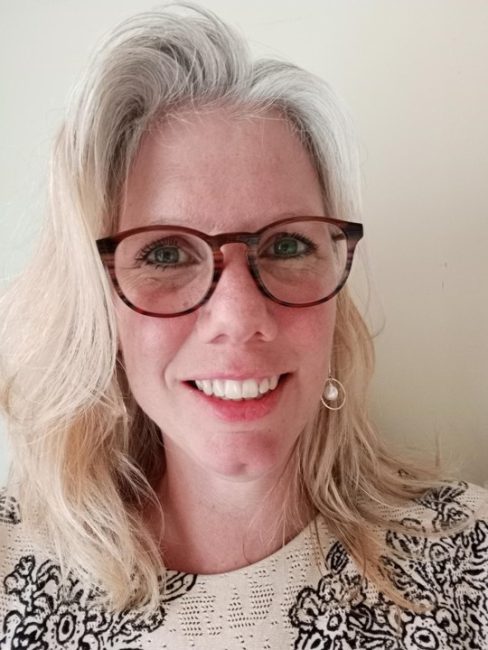
Gerdienke Prange, PhD
PhDSenior Researcher
Department Roessingh Research and
Development at Roessingh Center for
Rehabilitation