Smarter Emergency Support for People Living With Aphasia
APH-ALARM developed an AI-supported mobile system that helps people with aphasia request help during emergencies when speech is not possible. By combining gesture and motion analysis with user-centred design, the project created a working prototype now under consideration for integration into Hungary’s public emergency services.
Addressing Emergency Situations When Speech Fails
APH-ALARM was created to support people living with aphasia, who may be unable to speak or may lose speech capability during sudden health events. For these individuals, calling for help can be extremely difficult – especially when alone. The project aimed to create a mobile-based support system that detects critical situations based on movement and gesture patterns and then initiates an emergency alert. The consortium brought together researchers, an SME specialised in motion analysis and end-user organisations across Hungary, Austria and Portugal, ensuring a strong usercentred focus from the beginning.
Co-Creating with People Living with Communication Impairments
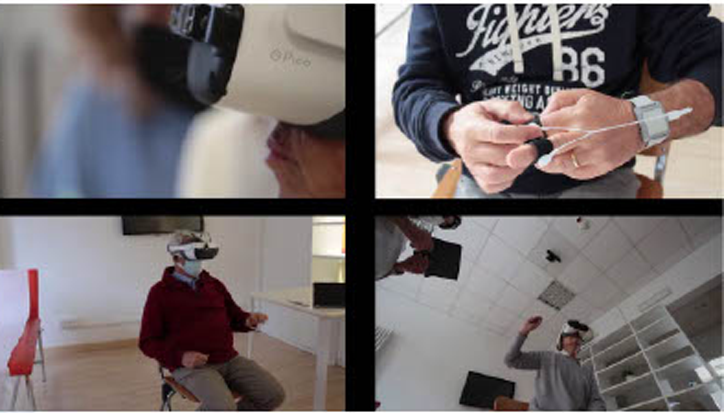
Because every person with aphasia has different capabilities, the system had to be adaptable rather than rely on one standard interaction model. The Hungarian aphasia association was deeply involved in defining AAL Success Stories requirements and testing prototypes. Users helped refine which gestures or movements could realistically be used to trigger alerts. Testing real emergency-like scenarios was challenging, so the team combined real user input with simulated events to train and validate the system. Ultimately, end users confirmed that APH-ALARM offered a valuable sense of safety, especially for people who cannot rely on speech in crisis situations.
“For people who cannot speak during an emergency, having a simple, reliable way to call for help can make all the difference.”
Prof. Géza Németh, Budapest University of Technology and Economics
A Working Prototype with National-Level Potential
Technically, APH-ALARM reached its goals: the prototype worked, users could trigger alarms, and the system reliably transmitted data. The SME partner had prior experience integrating accessibility solutions into the national 112 emergency service in Hungary, and APHALARM is now being discussed in this context. While not all project elements will move into service, core features – such as gesture-based alerts – are being considered for adoption at national scale, which would significantly broaden the system’s impact.
Challenges: Certification, Market Size and Social Value
Despite its promise, APH-ALARM faces structural barriers. Certifying the system as a medical device would require extensive funding and documentation – difficult for an SME in a niche market. Although the societal benefit is clear, willingness to pay remains limited. This tension between social usefulness and market viability is common in assistive technologies. The coordinator stressed that solutions for small communities often need public or EU-level support to become long-term services.
Lessons Learned: User Needs and Sustainability Must Drive Innovation
The project showed that meaningful solutions must be built around the lived reality of people with communication impairments. Early and deep involvement of end users was essential, as was close collaboration between researchers, SMEs and care organisations. APH-ALARM demonstrated that practical, accessible technology can dramatically increase safety – but also that sustainable adoption requires ecosystem support, funding and realistic regulatory pathways.
Project Info
APH-ALARM was an AAL project developing a gesture- and motion-based emergency alert system for people living with aphasia. Partners from Hungary, Austria and Portugal created and tested a working prototype, now being explored for integration with Hungary’s national emergency services.