Supporting Informal Care Through Unobtrusive Home Monitoring
CleverGuard explored how unobtrusive monitoring of everyday household activity can support informal caregivers of older adults living alone. By analysing electricity usage patterns with AI, the project aimed to detect deviations from normal routines and provide caregivers with meaningful prompts for timely, context-aware contact.
Observing Daily Life Without Intrusion
CleverGuard started from a simple but sensitive question: How can caregivers know when something might be wrong without constantly checking in or installing invasive sensors? The project focused on older adults living alone and used non-intrusive load monitoring (NILM) to analyse electricity consumption in the home. By observing when appliances such as kettles, toasters or televisions were used, the system learned a person’s daily routine and identified deviations that could signal a potential issue. Importantly, CleverGuard was never designed to diagnose conditions, but to flag changes that might warrant human attention.
From Load Curves to Meaningful Signals
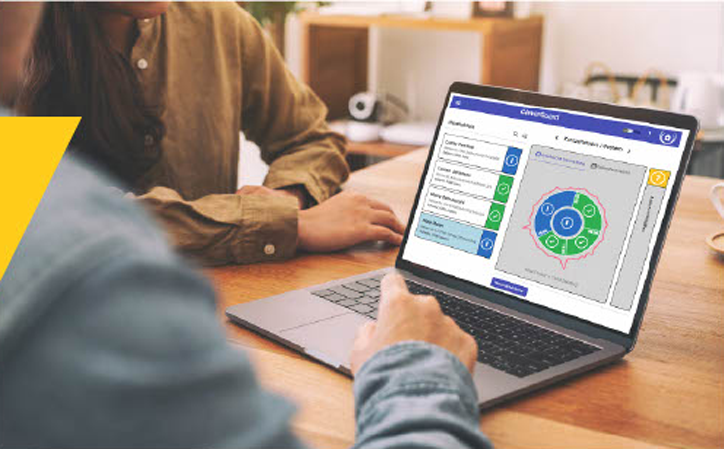
A key technical challenge lay in interpreting electrical load patterns meaningfully. After an initial learning phase, CleverGuard divided the day into morning, noon, afternoon, evening and night, evaluating each segment using AI-based outlier detection. If expected activity was missing – such as no morning appliance use – caregivers received a notification describing the deviation. The system deliberately avoided drawing conclusions about causes, recognising that the same pattern could reflect illness, lifestyle choices or harmless exceptions. This design choice underlined the project’s core principle: technology should support, not replace, human judgement.
Strengthening Care Relationships Through Better Communication
One of CleverGuard’s most important insights was its effect on the relationship between caregivers and older adults. Notifications did not prompt immediate intervention but created a concrete starting point for communication. Instead of routine calls asking “Are you okay?”, caregivers could refer to specific observations and open a meaningful conversation. Field trials, including assisted-living settings in Belgium, showed that initial concerns about surveillance often shifted over time. Many participants moved from feeling observed to feeling cared for, particularly once the system proved invisible in daily life and transparent in its purpose.
Cultural Context and Acceptance
Acceptance of CleverGuard varied across countries. While some participants initially expressed strong concerns about being monitored, others welcomed the reassurance that someone was paying attention. These differences highlighted how cultural norms, expectations of care and trust in technology shape adoption. The project therefore reinforced the importance of contextual sensitivity in AAL solutions and demonstrated that acceptance often grows once users experience tangible benefits and understand the system’s limitations.
Outcomes and Lessons Beyond Market Launch
Although CleverGuard did not result in a market-ready product within the AAL domain, its outcomes extended beyond commercialisation. The industrial partner applied the underlying technology to other application areas, while the research team gained substantial expertise in usability, co-creation and translating complex data into intuitive caregiver interfaces. The project also highlighted structural challenges common to AAL innovation: fragmented markets, limited willingness to pay and high expectations placed on early-stage prototypes. CleverGuard ultimately demonstrated how value can emerge through learning, transferable technology and improved understanding of informal care dynamics.
Project Info
CleverGuard was an AAL project using nonintrusive electricity-usage monitoring and AI to support informal caregivers of older adults living alone. By detecting deviations from daily routines, the system aimed to enable timely, human-centred communication rather than automated intervention.