Supporting Safer Care for People with Cognitive Decline
DIANA developed sensor-based tools to help nurses understand behaviour in people with cognitive decline. The project combined clinical, technical and research partners to visualise movement patterns, detect risks and support autonomy in daily activities.
A New Field: Understanding Behaviour in Dementia Care
DIANA marked an expansion of cogvis’ – coordinator and company behind the project – work from fall detection to the complex world of dementia care. People with cognitive decline show unpredictable behaviour, often changing from day to day. Nurses need clear insights into what happens in resident rooms, yet existing systems do little to capture patterns or detect early warning signs. DIANA aimed to close this gap by combining clinical expertise with advanced sensing and behavioural analytics.
From Idea to Prototype: Clinical, Technical and Research Contributions
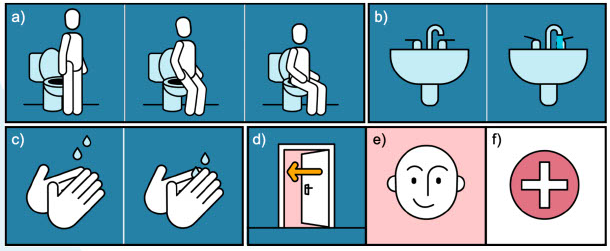
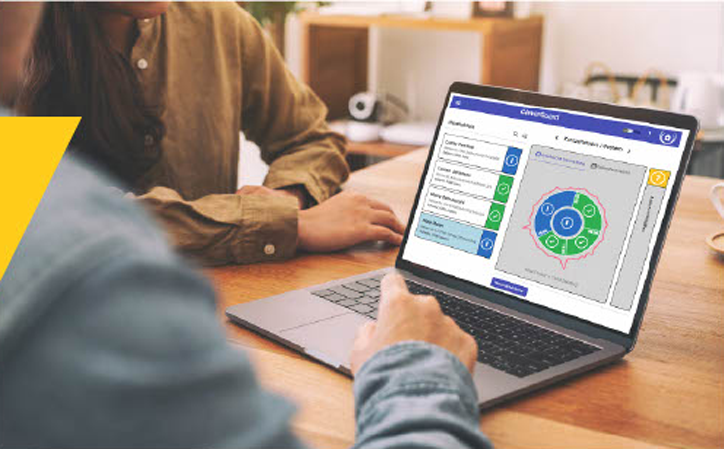
The consortium worked in real care environments to shape the solution. The Geriatric Clinic St. Gallen provided patient rooms, a memory clinic and a day-care setting for testing; its staff helped define real behavioural challenges and validated early prototypes. The Technical University of Vienna focused on detecting steps in daily routines – especially toileting – and explored how interfaces should look for people with cognitive decline, experimenting with abstract versus familiar visuals. The Portuguese nursing home partner – Cáritas Diocesana de Coimbra – contributed diverse use cases and helped test alarm concepts. Meanwhile, the University of Lisbon supported exploitation, including market scoping and business potential. Together, partners created heat-map–based behaviour visualisations, night-time movement insights and new ways to identify behavioural anomalies – all grounded in clinical practice.
Every time we work in dementia care, we realise how complex the field is – and how valuable it is when technology truly supports both staff and residents.”
Michael Brandstötter, founder and partner, cogvis software and consulting GmbH
Project Results and Integration into Market Products
Parts of the DIANA prototype – especially the movement visualisations and new alarm types – were further developed after the project and are now integrated in the cogvis’ commercial solution. These functions help care teams understand activity levels, sleep patterns, medication effects and sudden behavioural changes. While customers recognise the value, they tend to use the system selectively, for example when onboarding new residents or when behaviour becomes difficult to interpret. DIANA provided the foundation for expanding the company’s portfolio toward dementia-related care challenges.
Challenges: Ethics, Complexity and Market Adoption
Work with people living with dementia brought significant ethical complexity: obtaining consent, securing ethics approvals and conducting studies with a vulnerable group required much more effort than anticipated. The team also faced a lack of prior research, meaning many concepts had to be designed from scratch. Market adoption remains a challenge, as paying customers need solutions that are effortless to use and clearly fit into daily routines.
Outlook: Tailoring Insights for Every Role in Care
Next steps focus on tailoring information to different user groups – from assistant nurses to facility managers – each requiring different types of insights. DIANA also aims to make real care effort more visible, helping facilities document needs that are often underestimated in reimbursement processes. With dementia cases rising across Europe, demand for such tools is growing, and refinement continues.
Project Info
DIANA was an AAL project developing sensorbased behaviour monitoring for people with cognitive decline. Partners included a Swiss clinic, technical and academic teams, and care organisations in Portugal. Several functions developed in DIANA are now part of a commercial product supporting dementia care.