Redesigning the Toilet to Support Mobility, Safety and Independence
T4ME2 developed a new concept for semi-public toilets that help older adults and people with mobility limitations stand up more safely and independently. Through co-design and European field trials, the project created a modular prototype combining mechanical support, intelligent control and safety monitoring.
Aiming to Transform a Neglected Space in AAL Innovation
Toilets remain one of the most challenging yet least explored environments in ageing and care technology. Many older adults limit social participation because they fear unsafe or inaccessible restrooms outside their homes. T4ME2 tackled this directly by designing a supportive toilet for semi-public settings – restaurants, cultural centres, day-care facilities – where people most often need assistance. Coordinated by TU Wien, the project gathered 10 partners from Austria, Hungary, Poland, Romania, Belgium and the Netherlands, integrating engineering expertise, user knowledge and safety technologies.
Co-Designing a Toilet That Adapts to the User
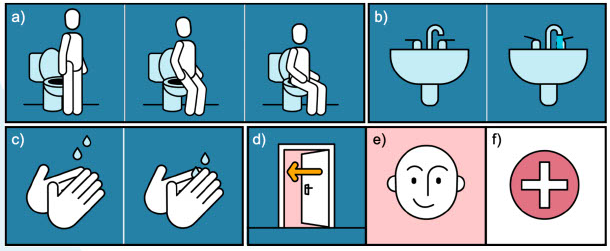
The prototype combined mechanical lifting and tilting functions to help users sit and stand with less effort. Interfaces were redesigned through participatory workshops, resulting in improved remote controls and alternative interaction modes. Speech control, initially surprising in this context, proved valuable for users who need both hands to stabilise themselves. RFID-based personalisation allowed the toilet to automatically adjust height and tilt when a user entered the room. These variations were tested in care homes and community spaces across Europe.
User involvement takes effort, but it is the only way to create solutions that truly enable independence and dignity.”
User involvement takes effort, but it is the only way to create solutions that truly enable independence and dignity.”
Adding Safety Monitoring Where It Matters Most
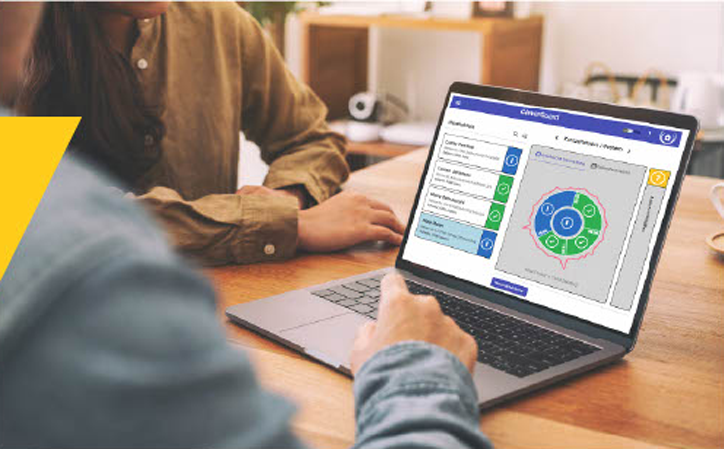
A key innovation came from integrating a mature fall- and movement-detection technology from the Viennese partner, originally developed for living rooms. T4ME2 adapted it for the confined space and angles of toilet rooms, enabling discreet monitoring and rapid help in emergencies. This component is already on the market in standard rooms and demonstrated strong potential as part of a future “smart toilet” ecosystem.
Real-World Trials Confirmed a Strong Need
Across trials, participants reported that supportive toilets would increase their confidence to leave home and participate in community life. For many, the biggest perceived barrier to public outings is the fear of not being able to stand up safely in unfamiliar restrooms. T4ME2 showed that mechanical support combined with monitoring can meaningfully reduce this fear. The project also tested feasibility within social welfare organisations, highlighting broader benefits for care systems through improved independence and reduced assistance needs.
From Prototype to Modular Commercial Paths
Although the full system is complex and costly to commercialise at once, partners continued development on selected components. The Hungarian manufacturer is advancing the motorised toilet base, while the Austrian safety technology partner is expanding monitoring solutions for bathroom use. The modular approach allows companies to bring components to market gradually, reflecting the high investment required to turn prototypes into certified products. For TU Wien, the project further demonstrated the importance of early user involvement and the value of AAL funding in bringing ambitious ideas to life.
Project Info
Although the full system is complex and costly to commercialise at once, partners continued development on selected components. The Hungarian manufacturer is advancing the motorised toilet base, while the Austrian safety technology partner is expanding monitoring solutions for bathroom use. The modular approach allows companies to bring components to market gradually, reflecting the high investment required to turn prototypes into certified products. For TU Wien, the project further demonstrated the importance of early user involvement and the value of AAL funding in bringing ambitious ideas to life.